
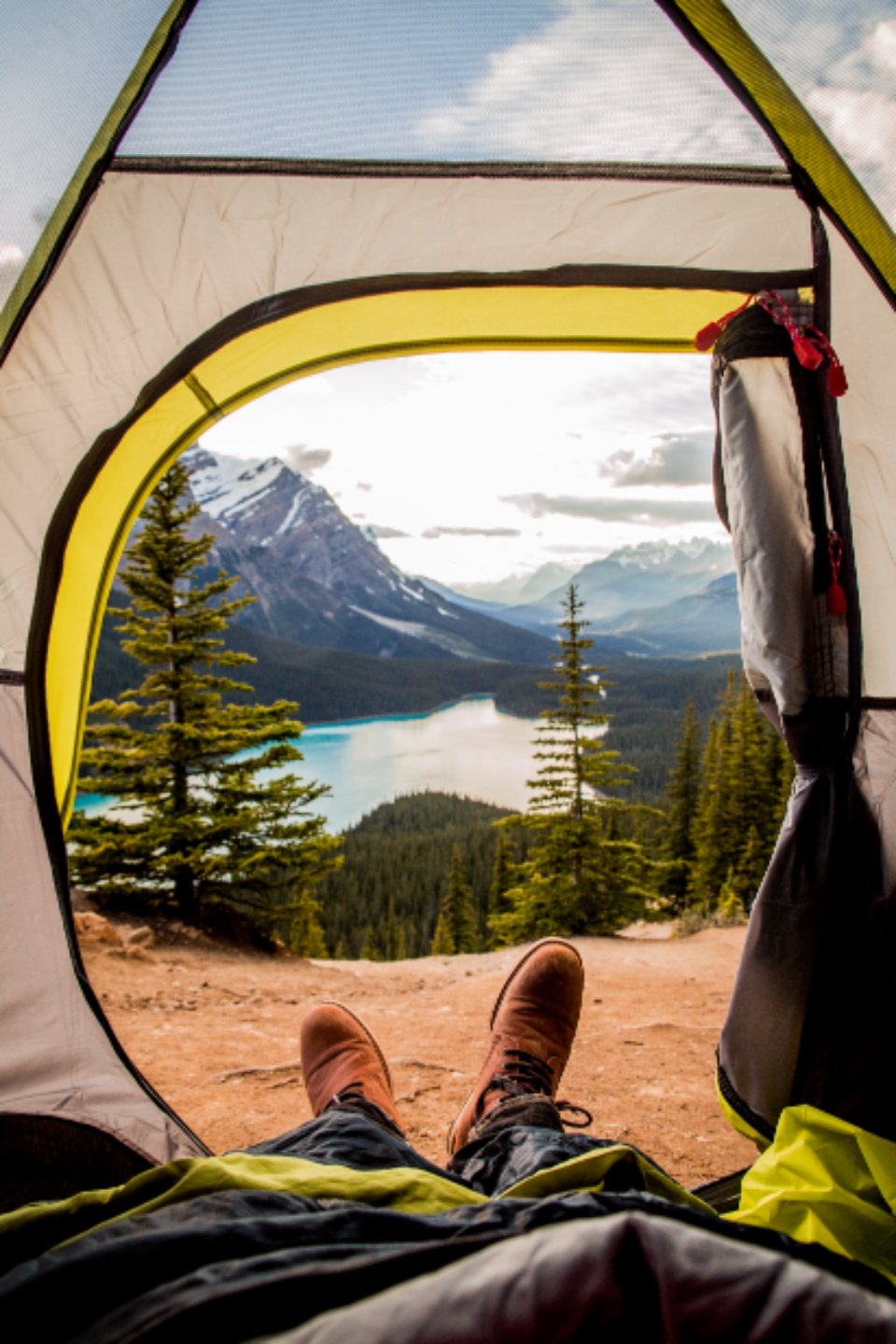
Some of the best nights we have ever spent outdoors cost nothing and had no reservation. We drove a gravel forest road until the pavement was a memory, found a flat pull-out with an old fire ring, and had a whole valley to ourselves. That is dispersed camping: camping on public land outside a developed campground, with no fee, no toilet, no water tap and no neighbour 6 metres away. It is one of the great freedoms of the American West, and it survives only as long as people do it with care. Here is where it is allowed and how to do it so the next person finds the place as good as you did.
Where it is allowed
The two big landlords are the national forests, managed by the Forest Service, and the public lands managed by the Bureau of Land Management, which together cover more than 400 million acres, most of it in the eleven western states and Alaska. On the great majority of that land, dispersed camping is allowed anywhere it is not specifically prohibited. The exceptions are developed recreation areas, the land within a certain distance of a campground or trailhead, wilderness areas with their own rules, areas closed for wildlife or restoration, and anywhere signed as closed. National parks are different: they generally do not allow dispersed car camping at all, and backcountry camping there needs a permit. State land varies, with some states, mostly those with large state forests in the Northeast and Upper Midwest, allowing it and many not.
The practical way to find out is to call the ranger district office for the forest you want to visit. They will tell you where the closures are, what the fire restrictions are that week, and where the good spots have become a problem. Fifteen minutes on the phone saves a long drive to a locked gate.
Stay limits
Free does not mean forever. Almost every national forest and BLM field office sets a stay limit, and the most common one is 14 days. A typical rule says you may camp in one spot for up to 14 days within any 28 or 30 day period, after which you must move at least 25 to 30 miles away and may not return within that period. Some busy areas near towns cut this to 7 days or even 3, and a few remote districts allow 16 or 21. The limits exist to stop people living on public land, and rangers enforce them where it has become a problem. On a long trip, plan your moves on the map before you start, and write down the date you arrived at each spot.
Motor vehicle use maps
The most important document for car-based dispersed camping is the Motor Vehicle Use Map, or MVUM, that each national forest publishes. It shows every road and trail open to motor vehicles, and it shows, with a symbol or a shaded band along the road, where dispersed camping with a vehicle is permitted. The usual rule is that you may drive off the road to camp within a set distance of the centreline, most often 30 metres, or 100 feet, and sometimes up to 90 metres, or 300 feet, but only where the map shows it and only on an existing spur or pull-out. Driving across a meadow or through sagebrush to reach a nicer spot is illegal, and it is the fastest way to get an entire road closed to camping for everyone.
The maps are free, updated yearly, and can be downloaded as a georeferenced file for a phone mapping app, which shows exactly where you are relative to the legal corridor. Print one too, because these roads are almost always beyond phone signal. Seasonal closures, usually for mud in spring or wildlife in winter, are marked with dates, and a road closed by a gate is closed even if the map shows it open.
Fire, and when not to have one
A campfire in a dry forest is the decision with the biggest consequences. Fire restrictions come in stages: Stage 1 usually bans fires outside developed campgrounds and often smoking outside a vehicle; Stage 2 bans fires entirely, along with chainsaws and sometimes stoves without a shut-off valve; full closure shuts the forest. The stage in force changes week to week in summer and is posted at the ranger station, at forest entrances, and on the forest’s website. Check it on the day you go in, not the week before.
Where fires are allowed, the etiquette is simple. Use an existing fire ring rather than building a new one. Keep the fire small, using only dead and down wood no thicker than your wrist, gathered well away from camp. Never leave a fire, even for a short walk. Put it out with water, stir it, and put your hand in the ashes: if it is too hot to touch, it is too hot to leave. Many wildfires on public land each year start from campfires that felt out to the person who walked away from them.
Waste: the problem that closes places
Nothing closes a dispersed camping area faster than human waste, and it is the thing rangers complain about most. With no toilet, the rule is a cathole 15 to 20 cm deep, dug with a trowel, at least 60 metres from any water, trail or camp, filled in and disguised afterwards. Toilet paper is packed out in a zip bag; it does not break down quickly in dry climates and animals dig it up. In popular areas, in the desert, and near rivers, a bag-based waste kit is the responsible choice and is increasingly required. Everything else, from food scraps to bottle caps, leaves with you. Grey water is scattered widely, 60 metres from water, after straining out the solids.
Existing sites, water and good neighbours
The best dispersed site is one that is already a site: a flat spot with a fire ring and compacted ground, because using it adds nothing to the damage already done. Resist the urge to make a new one 20 metres away for a better view. Water is rarely available, so carry it in, at about 4 litres per person per day for drinking, cooking and washing, and more in heat. Where you do camp near a stream, keep the 60-metre buffer and filter or treat anything you drink.
The etiquette is about space and quiet. Where there is room, camp out of sight of the next group, keep generators off after dark, keep dogs under control, and keep the road clear. Leave the site cleaner than you found it: pick up the previous visitor’s bottle caps and shotgun shells too. Dispersed camping stays open only because most people who use it look after it, and the easiest way to keep it is to be one of them.