
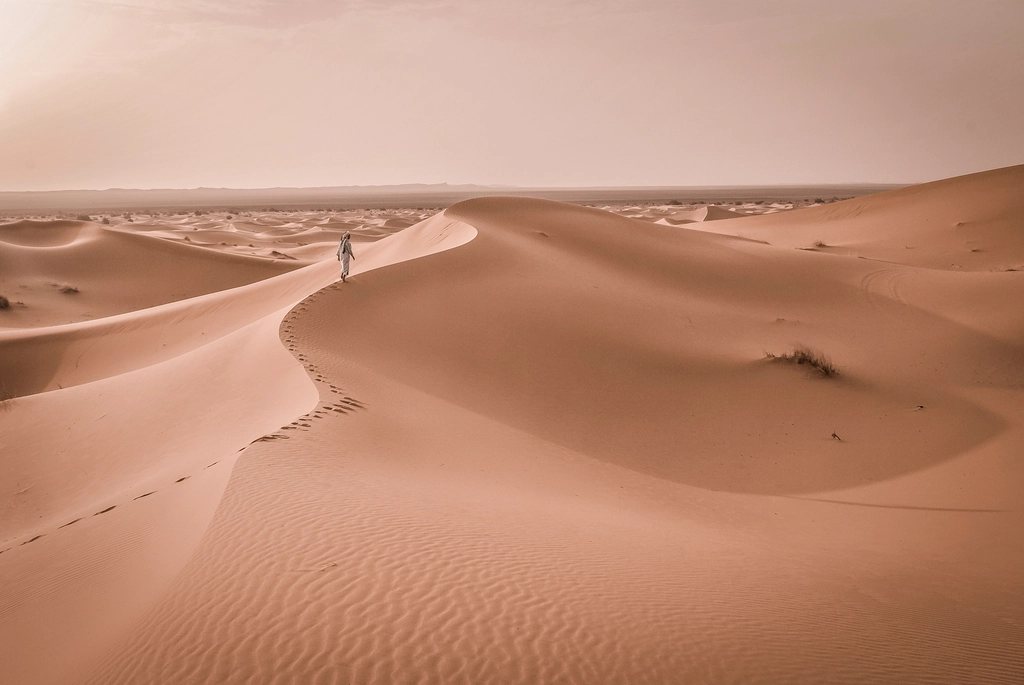
Heat is the hazard that hikers underestimate most. Cold announces itself. Storms can be seen coming. Heat just builds, quietly, until a strong walker is sitting on a rock with a headache and no idea how they got there. Every summer, rescue teams in the canyon country of the American Southwest, in the Mediterranean hills and in the Australian bush carry out people who were fit, experienced and simply started too late with too little water. We have made most of these mistakes ourselves at one time or another. What follows is how we hike in hot country now, organised around the four things that actually matter: timing, shade, water and knowing when to turn around.
Start before the sun
The single most effective heat strategy costs nothing: get up early. Mountaineers call it an alpine start, and it works just as well in a desert as on a glacier. On a summer day in the inner Grand Canyon, the air temperature at the river can pass 43 C (110 F) by mid-afternoon, and the rock radiates heat well into the evening. At 5 in the morning the same trail is pleasant. Rangers there advise against hiking at all between 10 in the morning and 4 in the afternoon in summer, and that rule of thumb transfers to most hot places. Our habit is to be walking by first light, have the bulk of the climbing done by 10, and be in shade, in camp or back at the car by early afternoon. If the day is long, we split it: walk early, sit out the middle of the day in whatever shade exists, and walk again in the last two hours before dark.
The same thinking applies to direction. Where there is a choice, do the climb in the morning while it is cool and the descent in the evening, rather than the reverse. And consider the season honestly. Death Valley in July, with daytime highs regularly over 49 C (120 F), is not a hiking destination; the same place in February is one of the finest.
How much water you really need
In hot conditions the body can lose a litre of sweat an hour, and on a steep climb in the sun it can be more. That means the general guidance of half a litre to a litre per hour, per person, is not generous; it is the minimum. For a six hour desert day we carry at least 4 litres each and plan the route around known water. Drink steadily rather than in gulps, starting before you feel thirsty, because thirst lags behind need. A useful check is the colour of your urine: pale is good, dark is a warning, and not needing to go for hours is a bigger warning.
Water alone is not the whole story. Sweat carries salt, and replacing several litres of it with plain water can dilute the blood’s sodium to dangerous levels, a condition called hyponatremia that looks a lot like heat exhaustion and is treated in the opposite way. Eat salty food through the day and add electrolyte powder or tablets to some of what you drink. On long hot days we alternate: one bottle plain, one bottle with electrolytes, and something salty every hour.
Shade you carry with you
In a desert there is often no shade at all between dawn and dusk, so you bring your own. A wide-brimmed hat that shades the ears and neck is the foundation. A lightweight long-sleeved sun hoodie, made of thin fabric rated for ultraviolet protection, keeps the sun off your arms and neck and, counterintuitively, is cooler than bare skin once it is wet with sweat or dipped in a stream. Light colours reflect heat; loose fits let air move. Sunglasses matter for more than comfort, because glare off pale rock and sand is exhausting. Sunscreen goes on the hands, the backs of the knees and the tops of the ears, the places that always burn.
Use real shade whenever you find it. A boulder, an overhang, a single juniper: stop, sit, drink, eat, and let your core temperature drop before the next stretch. Soaking a hat, a bandana or the sun hoodie in any water you pass is one of the most effective cooling tricks there is, because evaporation does the work the body would otherwise have to do.
Recognising heat illness
Heat exhaustion comes first, and it is common. The signs are heavy sweating, pale and clammy skin, weakness, nausea, headache, dizziness, cramps and a fast, weak pulse. The person may be irritable or unusually quiet. The response is to stop, get into shade, loosen clothing, cool the skin with water and fanning, and drink fluids with electrolytes in small amounts. Do not push on to the car. Most people recover in an hour or so if caught early.
Heat stroke is the emergency. It happens when the body’s cooling fails, and its signs are different: hot and often dry skin, confusion, slurred speech, stumbling, a very high body temperature above about 40 C (104 F), and sometimes collapse or seizure. This is life threatening and needs immediate aggressive cooling and emergency help. The key difference to watch for is the mind. Sweating and feeling awful is exhaustion; confusion and strange behaviour is stroke. Watch your partners for it, because the person suffering rarely notices.
Set a turnaround time and keep it
Before leaving the trailhead, agree on a time by which you will turn back regardless of where you are, and on a water level that triggers the same decision, typically half of what you carried. Then honour both. The failure pattern in hot country is almost always the same: the goal was close, the temperature was rising, the water was low, and nobody wanted to be the one to say stop. Canyons are especially cruel because the easy part comes first and the climb out is in the heat of the afternoon. Turn around while you still feel fine, not when you start to feel bad.
A hot-weather checklist
- Start at or before first light, and plan to be off the trail or in shade by early afternoon
- Carry a minimum of half a litre to a litre per hour, plus a reserve, and know where the next reliable water is
- Electrolytes and salty food, not just water
- Wide-brimmed hat, sun hoodie or long sleeves, sunglasses and sunscreen
- A turnaround time and a turnaround water level agreed in advance
- A way to call for help where there is no phone signal
Heat rewards humility. The people who hike well in it are not the toughest; they are the ones who got up earliest, drank the most and turned around soonest.