
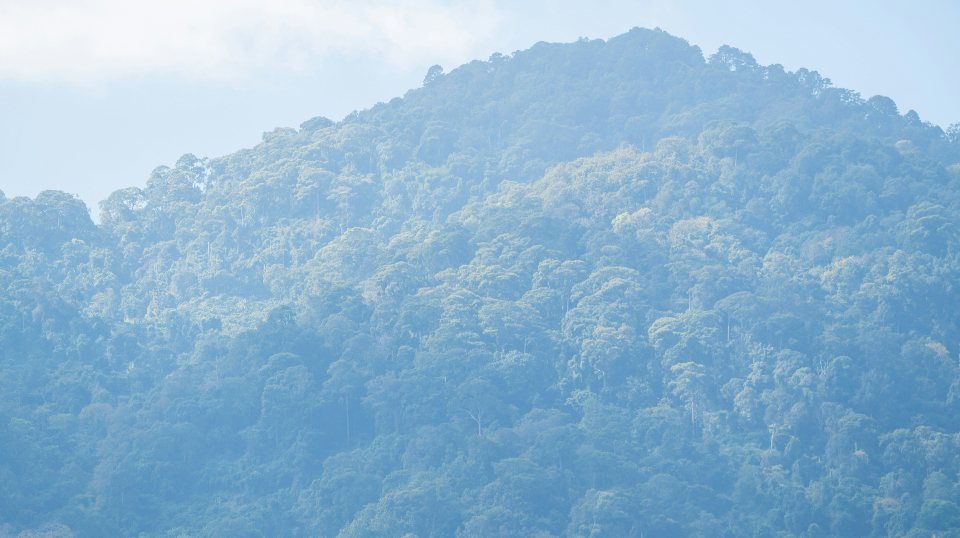
Northern Thailand is where the country folds up into mountains. The flat rice plains of the centre give way to forested ridges, limestone towers and cloud forest, and the roads out of Chiang Mai climb quickly into country where the air is cool and the villages still run on their own rhythm. We have walked here in the dry season and in the wet, and it remains one of our favourite places to trek without expedition logistics. The three experiences that stand out are the summit ridges of Doi Inthanon, the steep limestone climb of Chiang Dao, and the slow multi-day walks between hill villages that make this region unlike anywhere else in Southeast Asia.
Doi Inthanon: the roof of Thailand
Doi Inthanon is the highest mountain in Thailand at 2,565 m (8,415 ft), and it sits inside a national park about 100 km (62 miles) southwest of Chiang Mai. The summit itself is reached by road, which surprises some visitors, but the road is only the beginning. Near the top, the Ang Ka nature trail is a short boardwalk loop through a mossy cloud forest that drips even on a dry day, with rhododendrons, ferns and lichen hanging from every branch. It is an easy 20 minutes and a fine introduction to what a high tropical forest looks like.
The real walk is the Kew Mae Pan nature trail, a loop of roughly 3 km (just under 2 miles) that starts a few kilometres below the summit near the twin pagodas. It drops through the cloud forest and then breaks out onto an open ridge of grass and dwarf rhododendron, with views west over layered blue ranges toward the Myanmar border. The trail is only open in the cool and dry months, generally November through May, and it closes in the wet season to let the vegetation recover. A local guide from the Hmong or Karen communities at the park is required to walk it, arranged at the trailhead, and the fee is small. It is one of the best short hikes in the country.
The park also has waterfalls worth the detour, including Wachirathan and Siriphum, and there are campgrounds and simple bungalows near the headquarters. Nights at altitude are genuinely cold in December and January. Frost is not unusual on the summit, and we have seen temperatures close to 0 C (32 F) at dawn, so bring a warm layer even though you are in the tropics.
Chiang Dao: the limestone peak
Doi Chiang Dao, sometimes called Doi Luang Chiang Dao, is a very different mountain. It is a massive limestone peak of 2,175 m (7,136 ft), the third highest in Thailand, rising abruptly from the valley about 70 km (43 miles) north of Chiang Mai. There is no road to the top. The standard route starts from the Den Ya Kat ranger station on the eastern side and climbs steadily for around 8 to 9 km (5 to 5.5 miles) to a camping area below the summit, with a final scramble to the top for sunrise the next morning. Total elevation gain is on the order of 1,100 m (3,600 ft).
The mountain sits inside a wildlife sanctuary rather than a national park, and access is tightly managed. The climbing season is short, normally from November to around the end of February, and the number of trekkers per day is limited. A permit from the sanctuary office and a registered local guide are both mandatory, and porters can be hired to carry tents, water and food. There is no water on the route, so everything you drink has to be carried up. The views from the top at dawn, with the limestone ridges emerging from a sea of fog, are worth every step.
Walking between the hill villages
The other classic northern Thai experience is the village trek: two to four days walking on footpaths and dirt tracks between Karen, Hmong, Lahu and Akha settlements in the hills around Chiang Mai, Pai and Mae Hong Son. Daily distances are modest, often 10 to 15 km (6 to 9 miles), but the terrain is steep, the trails are muddy after rain, and the heat in the valleys can be draining. Nights are spent in village homestays or simple bamboo shelters, with meals cooked over a fire.
These treks are almost always done with a guide, and for good reason. The paths are unmarked, the villages are private homes rather than tourist attractions, and a guide who speaks the local language is what turns a walk into a visit. We would encourage anyone to choose a small operator based in the village area itself, and to ask directly how much of the fee stays in the community.
Seasons, leeches and smoke
Timing matters more here than in most places. The cool season from November to February is the best window: clear skies, comfortable daytime temperatures around 20 to 25 C (68 to 77 F) at mid elevations, and cold nights up high. March and April are the hot season, and they bring the burning season, when farmers clear fields and the air across the north fills with haze that can hide the mountains completely. From May or June until October the monsoon arrives. Trails turn to mud, streams rise, and the leeches come out in force in the forest. Leeches are harmless but unpleasant; long socks tucked into trousers, a quick check at every rest stop and a pinch of salt in a pocket are the standard defences.
Practical notes
National parks charge an entrance fee that is higher for foreign visitors than for Thai citizens, and it is paid at the gate. Guides are required on the Kew Mae Pan trail and on Doi Chiang Dao, and strongly advised for any multi-day village trek. For the mountain routes you should carry:
- At least 3 litres of water per person per day on Chiang Dao, since there is none on the route
- A warm layer and a hat for cold summit nights and dawns
- Rain protection in every season, because cloud forests make their own weather
- Sun protection for the exposed ridges
- Small cash for park fees, guide fees and village purchases
Visiting villages with respect
The hill communities of the north are not a backdrop. Ask before photographing people, especially elders and children. Dress modestly, remove shoes before entering a home, and accept food and tea when offered. Buy what the village makes rather than handing out sweets or money to children, which encourages begging and undermines the schools. Learn a few words of Thai, and when a guide explains a custom, follow it. Walk quietly through fields, close gates behind you, and leave the trail cleaner than you found it. If we treat these places as homes rather than attractions, they will still be worth walking to in twenty years.