
Trolltunga is the rock shelf everybody has seen and few have stood on. The Troll’s Tongue juts out horizontally about 700 m (2,300 ft) above Lake Ringedalsvatnet in the Hardanger region of western Norway, and the photograph of a tiny person on the tip has probably done more for Norwegian tourism than any brochure. What the photograph does not show is the 10 to 12 hour day it takes to get there and back. Here is the honest version.
Distances, ascent and the two starting points
The classic route starts at the Skjeggedal car park (P2), about 7 km up a side road from the village of Tyssedal near Odda. From there the round trip is roughly 28 km (17.4 miles) with about 1,000 m (3,300 ft) of ascent, and most people take 10 to 12 hours. The first section from Skjeggedal is a brutal 400 m climb up a steep, rough track that used to be a funicular line, and it sets the tone for the day.
A higher car park at Magelitopp (P3), reached by a narrow toll road that opens in the morning and has a limited number of spaces, cuts the round trip to about 20 km (12.4 miles) and the ascent to around 800 m (2,600 ft). It saves 1.5 to 2 hours, and if you can get one of those spaces, we think it is worth every krone. Spaces can be reserved in advance, and in high summer they go quickly. There is also a seasonal shuttle bus that runs between the lower and upper car parks, which is what we used on our second visit.
Whichever start you choose, the terrain above the initial climb is a long rolling plateau of bare rock, bog, boardwalks and small climbs, with the trail marked by red T symbols painted on stone. It is never technical, but it is relentless. The final approach drops slightly to the tongue itself, and you will hear it before you see it, because there is almost always a small crowd.
Season: when the mountain is open to walkers
The self-guided season runs from roughly 1 June to 30 September, though in a snowy year the trail can still have deep drifts in early June and the local authorities may advise waiting. In the shoulder weeks of mid-May to early June and October, guided groups are strongly recommended, and from mid-October until the following spring the route is winter terrain: snow, ice, short days and real avalanche and navigation hazards. In that period, the mountain is guided only. Winter trips with snowshoes and a guide do run, and people who have done them describe an entirely different, silent Trolltunga.
Even in July the weather on the plateau can turn in minutes. We have stood on the tongue in shirt sleeves and, ninety minutes later, walked back through hail. There is no shelter of any kind between the car park and the rock. Rain, wind and a temperature of 5 degrees Celsius at the top on a summer day are ordinary, not exceptional.
The queue for the photo
Yes, there is a queue. On a fine July day it can be 30 to 60 minutes long, and the wait is entirely for the classic shot: one person, on the tip, arms in the air. The system is informal and self-organised. Someone from the group behind you takes your photo from the viewpoint above the ledge, then you take theirs. Nobody is in charge, and it works surprisingly well, though we have seen tempers fray when somebody spends five minutes posing.
The ledge is safe enough if you stay well back from the edge and move deliberately. There is no railing and no drop protection, and there have been serious falls, so please do not do handstands, do not sit with your legs over the edge, and do not go out there in strong wind. Early starters sometimes find the tongue empty around 9 am. For us, that quiet moment is worth an alarm set for 5 am.
What to bring and what to leave
Because the day is long and exposed, we pack it like a full mountain day rather than a walk. Good hiking boots with grip for wet rock are the single most important item; trainers turn the bog and the polished granite into a misery. Then we carry a waterproof shell and trousers, a warm mid-layer, hat and gloves, sunglasses, a headlamp in case the return runs late, a map or offline route on the phone, and a small first-aid kit. Water is plentiful in streams along the plateau, and we refill freely above the treeline, though we carry a litre each to start. Food for a full day, plus a spare bar or two for the person in your group who bonks on the climb, is essential.
Trekking poles earn their place on the 400 m Skjeggedal stairs, both up and down. On the way down that section is hard on the knees, and by then you have already walked 25 km. Mobile coverage is patchy on the plateau. A rescue is a helicopter job, so carrying a small margin of warmth and food is not overkill.
Getting to Odda and where to base yourself
Odda sits at the head of the Sorfjord, about three hours by road from Bergen. Buses from Bergen run to Odda, and in summer there are connecting services to Tyssedal and the Skjeggedal car park. Odda and Tyssedal have hotels, hostels, cabins and campsites, and staying there the night before makes an early start realistic. If you are driving from Oslo, allow six to seven hours with the ferry crossings and mountain roads. Parking at Skjeggedal costs a daily fee and fills early on fine days, so arriving by 7 am is sensible.
A few of the things we now consider non-negotiable for Trolltunga:
- Start by 8 am at the latest from Skjeggedal, earlier if you can manage it.
- Check the local weather forecast and the trail status the evening before and at breakfast.
- Reserve the upper car park or the shuttle if you would rather spend your legs on the plateau than on the stairs.
- Turn back by 2 pm if you have not reached the tongue; the return is slower than you think.
- Bring more warm clothing than seems reasonable for a summer walk.
Is it worth it?
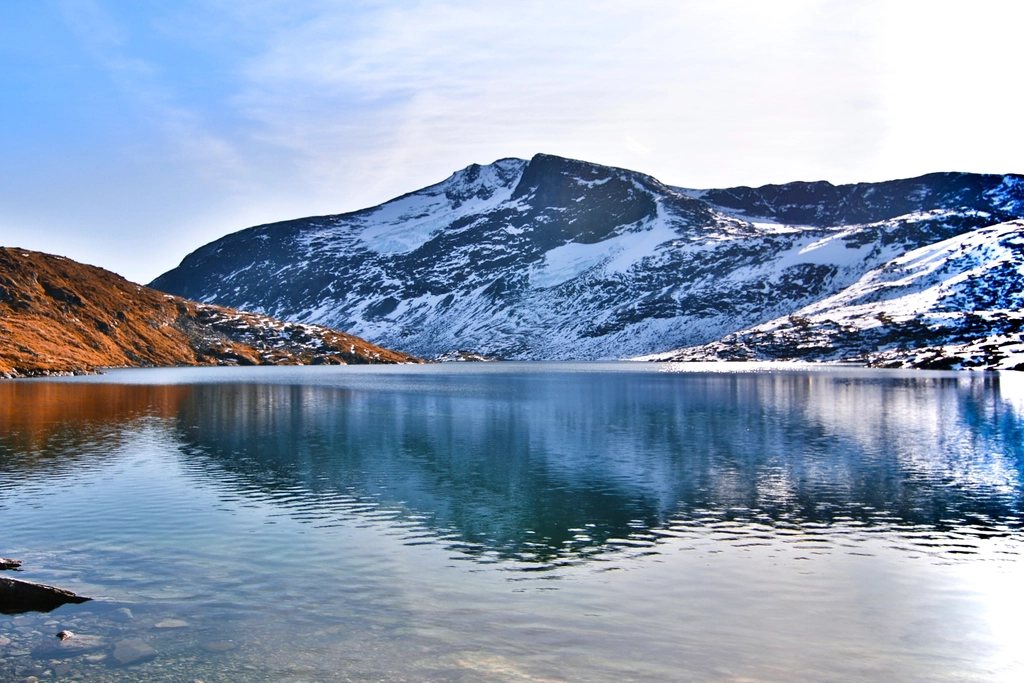
Honestly, yes, and not only for the ledge. The plateau itself is a beautiful place, with tarns, snow patches into July, and long views over the lake and the glacier-cut valleys of Hardanger. The photo is just the excuse. Give it a full day, treat it as a mountain rather than an attraction, and it will repay you.